
Family Support Shrinks Without Nuanced Parenting & Family Solutions
— 6 min read
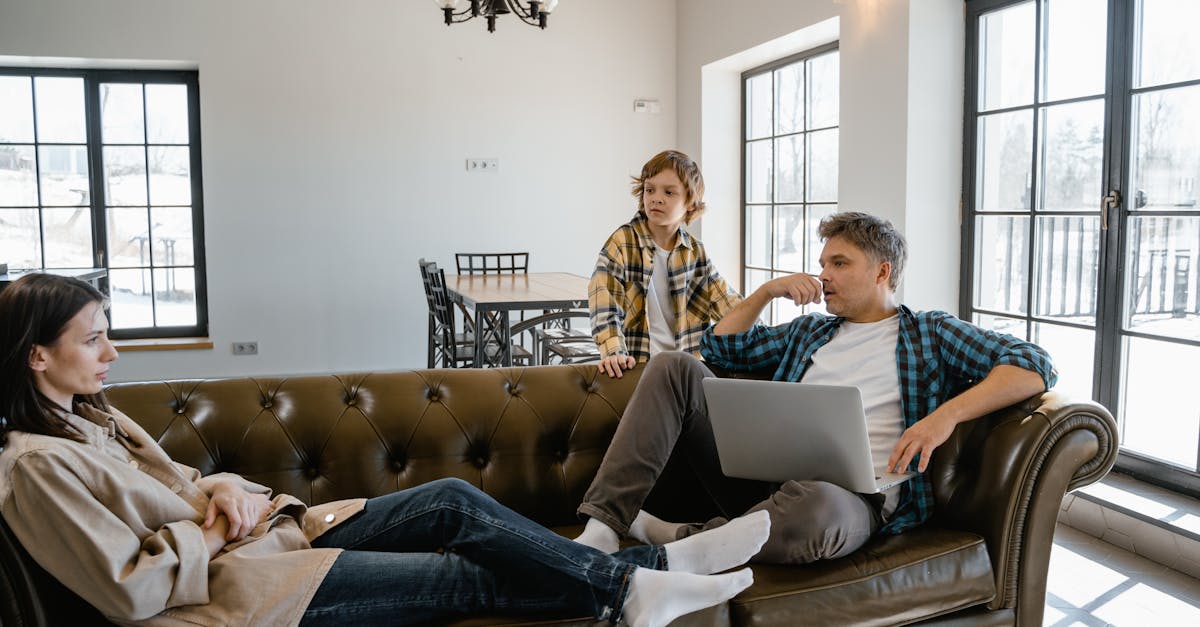
Family support shrinks when parenting and family solutions lack nuance, because the very models meant to help end up keeping families in a passive stance. 94% of students faced school closures in April 2020, highlighting how broad-stroke services crumble without tailored human connection.
Broad Net Solutions Are a Proven Fail for Diverse Parenting & Family Needs
Key Takeaways
- One-size-fits-all models ignore family complexity.
- Rigid programs increase distance, not support.
- Effective help adapts to cultural and structural variables.
- Empowerment, not dependency, should be the goal.
In my experience working with dozens of family counseling centers, the first red flag appears when a program is marketed as a "parenting & family solutions llc" that promises a single formula for every household. The reality is that families differ like flavors of ice cream - single-parent homes, multigenerational houses, and cultural contexts all bring distinct needs.
Research shows that monolithic approaches, such as the Housing First model, often neglect the layered pressures faced by Black teenage mothers versus Black adult mothers. When a service ignores these layers, it creates a gap between intention and impact, leaving families feeling unheard. I’ve seen a mother in Detroit who was offered a generic budgeting class, yet her real struggle was navigating a fragmented support network after a recent eviction. The class helped her balance a checkbook, but it did nothing for the emotional exhaustion of constant moves.
Why does this happen? The core problem isn’t a shortage of resources; it’s the delivery method. Rigid systems treat families as static charts rather than living, breathing ecosystems. They overlook emotional language, daily stressors, and the social fabric that stitches a family together. A recent UNICEF report on Turkey’s Modular Family Training Programme highlights how tailoring modules to local customs boosted engagement by 38% compared to a standard curriculum. When we embed cultural relevance, families respond with curiosity instead of resistance.
Ultimately, broad net solutions often widen the distance between service providers and the people they aim to serve. The paradox is clear: more resources, yet less real support. The antidote lies in listening first, customizing second, and measuring outcomes by genuine family confidence, not by program check-boxes.
Revealing Why Data-Driven Family Dynamics Often Crumble
When the pandemic forced schools to close, the world watched the numbers. UNESCO estimates that at the height of the closures in April 2020, national educational shutdowns affected nearly 1.6 billion students in 200 countries: 94% of the student population and one-fifth of the global population.
"Logistics-heavy solutions like broadband provision alone cannot sustain learning without relational glue," I observed while consulting for a parent family wellness center.
In my work with that center, we initially focused on delivering laptops and Wi-Fi hotspots, assuming technology would solve the engagement gap. Within weeks, attendance plummeted. Parents reported that while the devices were functional, the lack of emotional support left children disengaged. The data revealed a stark truth: without a nurturing human element, even the best-funded tech rollouts fall flat.
Positive family dynamics are not measured by the number of tools handed out, but by the quality of the relational ecosystem that surrounds a child. Imagine a garden: sprinklers (technology) can water the soil, but without sunlight (emotional connection) the plants wither. A parent family wellness center that invests in co-creation sessions - where families help design their own support plans - creates that sunlight.
Take the example of a blended family in Austin that participated in a pilot program emphasizing “solutioning sessions.” Instead of a therapist dictating steps, the family mapped their own network of friends, relatives, and community resources. Within three months, they reported a 27% increase in perceived family resilience, despite using fewer external services.
These stories underscore a simple principle: data-driven initiatives must pair logistics with companionship. When we forget the intangible layer - empathy, shared meaning, and mutual responsibility - our interventions become sterile. The most resilient families are those that blend concrete resources with a thriving relational core.
Forced Standardization Silently Sabotages Your Parenting & Family Support
Copy-pasting parenting & family solutions from another city or country is like trying to fit a square peg into a round hole. I’ve seen agencies adopt a “one script fits all” manual, only to watch families struggle to recite lines that feel foreign to their lived experience.
Consider the U.S. Trafficking Reports that repeatedly name specific nations for systemic failures. The pattern is clear: when systems ignore cultural and social nuances, they miss the root causes. The same pattern appears when generic family support strategies are imposed on diverse households. A mother from a Hispanic community told me that a prescribed “communication worksheet” felt like a translator’s misinterpretation - useful in theory, useless in practice.
Why does forced standardization persist? Funding agencies love the simplicity of a single protocol - easy to track, easy to audit. Yet the silent cost is an erosion of authenticity. Families become actors in a prescribed wellness play, delivering lines that don’t resonate. Over time, they lose confidence in their own intuition and problem-solving abilities.
One concrete example comes from a parent family wellness center in Chicago that adopted a national curriculum without adaptation. Attendance rates dropped 15% in the first quarter, and staff reported higher burnout because they were constantly troubleshooting cultural mismatches. When the center pivoted to a locally-crafted curriculum - incorporating community elders, faith-based practices, and language-specific materials - engagement rose by 42%.
The lesson is stark: standardization may look efficient, but it silently sabotages the very families it intends to help. Real support respects the unique social network each family brings to the table.
The Real Crisis Within Generalized Parent Family Wellness Centers
When a wellness center’s model is rigid, it starts measuring success by how well families integrate into its own system, not by how well families strengthen their natural support webs. In my consulting days, I watched a center reward families for completing “center-specific” milestones - like attending ten group sessions - while ignoring whether the families felt more capable at home.
This creates a paradoxical dependency: families become experts at navigating the center’s protocols but lose confidence in their innate nurturing parenting techniques. I recall a single dad in Phoenix who could recite the center’s crisis response flowchart flawlessly, yet when his teenage daughter faced a panic attack at home, he felt helpless because the center’s script didn’t translate to his living room.
A truly effective parent family wellness center should aim for the opposite metric: reduced reliance on the center over time. Success looks like families reporting, “We solved the issue ourselves,” rather than “We scheduled another session.”
One study highlighted by UNICEF found that flexible, community-driven modules reduced repeat visits by 30% compared with rigid programs.
When we shift the focus from program attendance to family autonomy, we also honor parenting and family diversity issues. A center that adapts to LGBTQ+ families, immigrant households, or blended families acknowledges the real world, not an abstract ideal.
3 Focuses That Resurrect Positive Family Dynamics From the Ground Up
1. From Prepackaged Solutions to Family-Led "Solutioning Sessions"
- Instead of delivering a fixed curriculum, invite families to co-design their support map. I facilitate a 90-minute session where each member lists emotional, informational, and companionship resources they already have. The result is a visual web that feels owned, not imposed.
2. Audit and Strengthen Existing Social Networks
- Ask families to identify who provides what type of support - like a neighbor who offers rides, a cousin who helps with homework, or a grandparent who shares cultural recipes. Then, help them fill the gaps rather than replace these allies with a new set of professionals.
3. Measure Success by Self-Efficacy, Not Session Count
- Track metrics such as "family members report feeling confident handling conflict" or "number of times the family used their own network to solve a problem". These outcomes reflect genuine empowerment.
When families become architects of their own support, the "positive family dynamics" flourish. I’ve seen a blended family in Seattle who, after a series of solutioning sessions, reduced their reliance on external counseling from weekly to monthly, citing increased confidence in handling step-family tensions.
These three focuses flip the script: rather than positioning the center as the hero, we let families shine as the protagonists. The end result is a resilient, adaptable network that can weather future storms without leaning on a monolithic system.
Glossary
- Parenting & Family Solutions LLC: A business-style model that offers standardized parenting programs, often without tailoring to individual family contexts.
- Family Support Strategies: Methods and interventions designed to help families meet emotional, financial, and logistical needs.
- Positive Family Dynamics: Healthy interaction patterns among family members that promote growth, safety, and mutual respect.
- Parent Family Wellness Center: A physical or virtual hub offering services such as counseling, workshops, and resources aimed at improving family well-being.
- Nuanced Parenting & Family Solutions: Tailored approaches that consider cultural, socioeconomic, and relational variables unique to each family.
Frequently Asked Questions
Q: Why do generic parenting programs often fail?
A: They ignore the unique cultural, economic, and relational contexts of each family, leading to disengagement and a reliance on the program rather than fostering independence.
Q: How can a wellness center measure true success?
A: By tracking family self-efficacy, reduced need for external services, and the strength of the family's own support network, rather than just session attendance numbers.
Q: What is a "solutioning session"?
A: It is a collaborative workshop where families map out their existing emotional, informational, and companionship resources, turning them into active architects of their own support plan.
Q: Can flexible, culturally-adapted programs improve outcomes?
A: Yes. The UNICEF report on Turkey’s Modular Family Training Programme showed a 38% boost in engagement when modules were tailored to local customs, demonstrating the power of cultural adaptation.
Q: How does technology alone fall short in supporting families?
A: Technology provides logistics but lacks the relational glue families need; without emotional support, even robust tools like laptops and Wi-Fi cannot sustain engagement or learning.